


Egypt is called the Gift of the Nile because the river made civilization possible. In a land dominated by desert, the Nile created a narrow corridor of fertility, movement, abundance and cultural imagination.
Why Egypt Is Called the Gift of the Nile
The phrase “Egypt, the Gift of the Nile” is traditionally attributed to the ancient Greek historian Herodotus, who recognized how deeply Egypt depended on its river. Without the Nile, the landscape of ancient Egypt would have been overwhelmingly arid, difficult to farm and far less capable of supporting large cities and complex society.
The Nile was not just a source of water. It was Egypt’s agricultural engine, transportation route, trade artery, sacred symbol and cultural backbone. Its annual flooding renewed the land. Its current connected regions. Its banks became the stage on which temples, cities, tombs and royal power developed.
The original text you provided explains the Nile’s role in fertile soil, predictable flooding, water supply, transportation, culture and religion. This rebuilt Vagus version expands that foundation into a premium cultural travel article with English internal links, visual blocks, travel interpretation, tables and conversion-focused sections for private Egypt journeys.
Quick Answer
Egypt is called the Gift of the Nile because the Nile River provided the water, fertile soil, transport, food production and cultural stability that allowed ancient Egyptian civilization to flourish in the desert.
The Lifeblood of a Desert Civilization
Egypt is largely desert. To the west stretches the Sahara; to the east lie arid mountains and desert routes. In this setting, the Nile created something extraordinary: a ribbon of life running through an otherwise harsh environment.
Ancient settlements, fields, temples and cities grew along this river corridor. The contrast between desert and cultivated land was so dramatic that it shaped Egyptian thought itself. The fertile black land of the Nile Valley represented life and order, while the surrounding desert represented danger, dryness and the unknown.
Water Source
The Nile provided essential water for people, animals, crops and daily life.
Fertile Corridor
The river created a narrow but rich agricultural zone through the desert.
Civilization Axis
Egypt’s cities, temples and royal centers developed along the Nile’s banks.
A River Between Two Deserts
The Nile was more than water. It was the line between life and emptiness, between cultivated fields and desert silence, between survival and civilization.
Fertile Soil and the Annual Flood
One of the Nile’s greatest gifts was its annual inundation. Each year, floodwaters spread across the floodplain and deposited rich silt that replenished the soil. This natural cycle made farming possible on a scale that could support villages, cities, temple economies and royal projects.
Ancient Egyptians learned to organize life around the river’s rhythms. Their calendar, agricultural planning and religious imagination were all shaped by the rise and retreat of the Nile.
Wheat, Barley and Flax
The fertile Nile soil supported crops such as wheat, barley and flax, helping Egypt produce food, linen and agricultural surplus.
Why it mattered: Surplus food allowed specialization, administration, trade and monumental building.
Natural Fertilization
The flood renewed the fields, reducing dependence on artificial fertilization and making the Nile Valley exceptionally productive.
Why it mattered: Predictable fertility helped create long-term stability.
Time Organized by the River
The Egyptian agricultural year was deeply connected with the river’s cycle of inundation, planting and harvest.
Why it mattered: The Nile helped structure work, ritual and seasonal life.
Surplus Supported Civilization
Food surpluses supported workers, scribes, priests, craftsmen and the central authority of the state.
Why it mattered: The river helped fund temples, tombs, pyramids and administration.
Water Supply, Transportation and Political Unity
Beyond agriculture, the Nile was Egypt’s main highway. Boats moved people, grain, stone, soldiers, officials and religious processions between regions. The river made it easier to connect Upper and Lower Egypt into one coherent civilization.
Because the Nile flowed north and prevailing winds often helped boats sail south, travel along the river was unusually practical. This movement supported trade, communication, government control and cultural exchange.
| Nile function | How it worked | Why it shaped Egypt |
|---|---|---|
| Fresh water | Supported drinking, cooking, irrigation, animals and daily life. | Allowed large populations to survive in a desert region. |
| Transport route | Boats moved goods, people, building materials and officials. | Connected cities, temples, quarries and royal centers. |
| Trade artery | Enabled internal exchange and links with wider trade networks. | Strengthened Egypt’s economy and cultural connections. |
| Political unity | Connected Upper and Lower Egypt along one natural axis. | Helped the kingdom remain organized and administratively connected. |
The Nile Was Egypt’s First Grand Route
Before highways and railways, the Nile carried everything: grain, stone, soldiers, priests, royal messages, festivals and the movement of daily life.
How the Nile Shaped Religion, Mythology and Culture
The Nile was central to Egyptian religion because it represented renewal. The annual flood mirrored the idea that life could return after apparent death. This pattern influenced myths of rebirth, fertility, divine order and agricultural abundance.
Many rituals, festivals and sacred ideas were connected with the river. Temples were often built near the Nile or connected to it through processional routes. The river was not only useful; it was sacred.
Divine Renewal
The river’s flood echoed the theme of rebirth central to Egyptian belief.
Fertility
The Nile made vegetation, crops and agricultural abundance possible.
Temple Life
Rituals, offerings and sacred landscapes were often shaped by the river.
Cosmic Order
The Nile’s cycles helped Egyptians imagine a universe governed by order and renewal.
Myth and Memory
The river appears throughout Egyptian cultural imagination and symbolic thought.
Travel Depth
Understanding the Nile helps travelers read temples, cities and landscapes more deeply.
The Nile as a Living Travel Experience Today
For modern travelers, the Nile is not only an ancient subject. It remains one of the most atmospheric ways to experience Egypt. A private Nile journey allows travelers to connect Cairo, Luxor, Aswan, temples, river islands, sunsets and daily life along the banks.
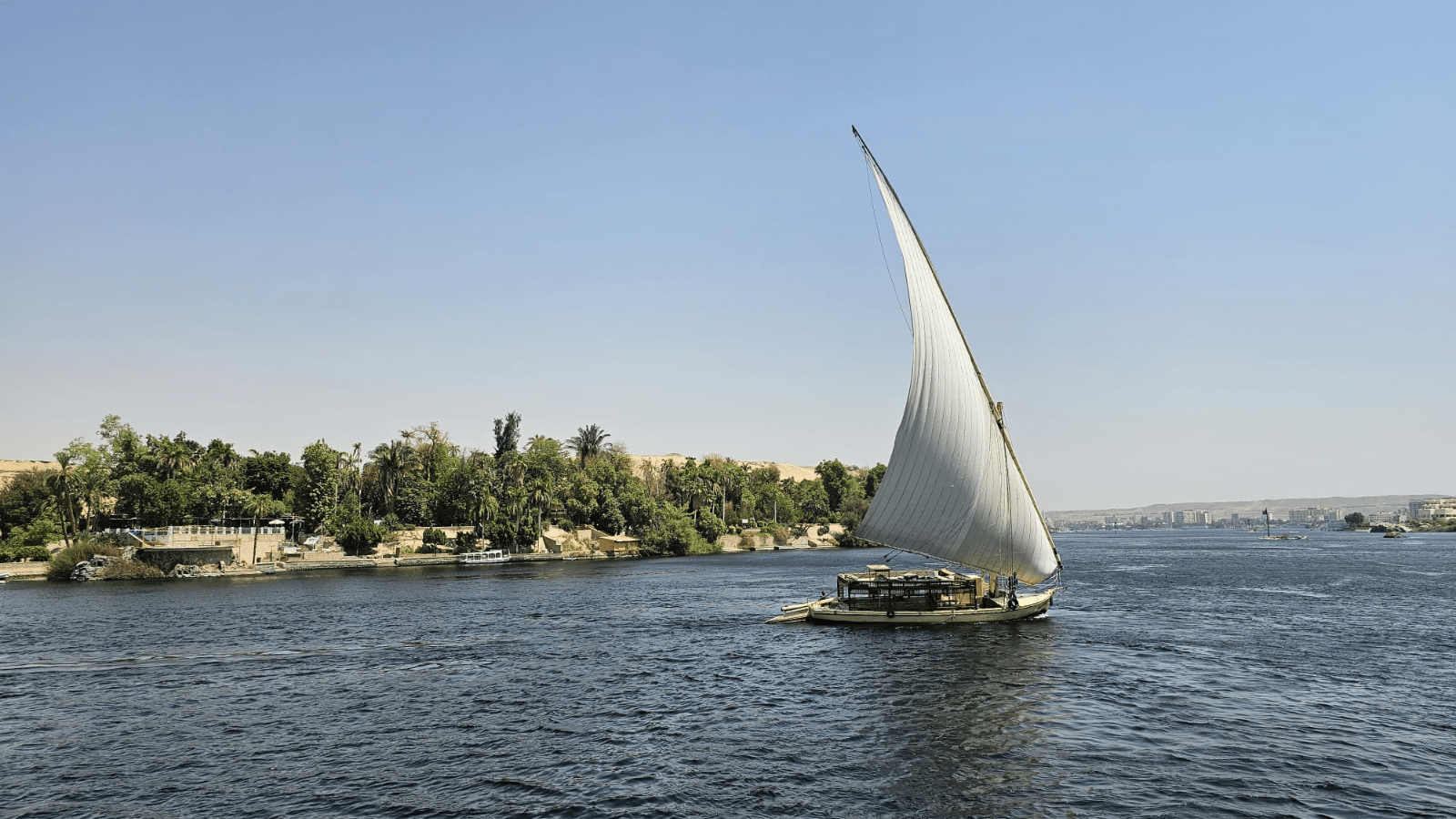
Whether through a luxury Nile cruise, a felucca ride in Aswan, a private tour in Luxor or a river view in Cairo, the Nile continues to define the mood of an Egypt journey.
| Travel experience | What it reveals | Best for |
|---|---|---|
| Nile Cruise | Temples, river life, Luxor-Aswan landscapes and slow travel. | Luxury travelers, couples and cultural itineraries. |
| Aswan Felucca | Quiet river movement, islands, Nubian scenery and sunset views. | Travelers seeking atmosphere and calm. |
| Luxor Nile Route | East Bank, West Bank, temples, tombs and royal landscapes. | History-focused travelers. |
| Cairo Nile Views | Modern capital life built around an ancient river. | Short stays, city breaks and private Cairo tours. |
Where Can Travelers Experience the Nile’s Legacy?
The Nile’s legacy is best explored through a route that connects landscapes, temples, cities and river experiences. A private guide can help explain how the river shaped both ancient monuments and modern Egyptian life.
Cairo and the Nile
Explore the capital’s river setting, museums, Giza connections and the contrast between ancient and modern Egypt.
Explore Cairo Day Tours →Luxor and Ancient Thebes
See how the Nile divided sacred landscapes between temples of the living and tombs of the west.
Explore Luxor Day Tours →Aswan and Nubian River Scenery
Experience Nile islands, feluccas, southern temples and one of Egypt’s most beautiful river settings.
Explore Aswan Day Tours →Tailor-Made Nile Journey
Create a private itinerary focused on Nile cruises, temples, landscapes, history and elevated comfort.
Plan a Tailor-Made Tour →Why the Nile Belongs in a Private Luxury Egypt Journey
The Nile is the thread that connects Egypt’s great sites. Cairo, Giza, Luxor, Aswan, ancient temples, agricultural landscapes and river life all become more meaningful when seen as parts of one Nile civilization.
With Vagus Travel Co., a Nile-focused journey can be shaped around comfort, pacing and interpretation — from private transfers and expert guides to Nile cruises, felucca moments and curated visits to temples that were built in conversation with the river.
Vagus Travel Perspective
Luxury travel in Egypt is not only about seeing monuments. It is about understanding the landscape that made those monuments possible.
Useful English Vagus Links for Planning a Nile-Focused Journey
All internal links here use the English version of Vagus Travel Co. to keep the visitor path consistent.